
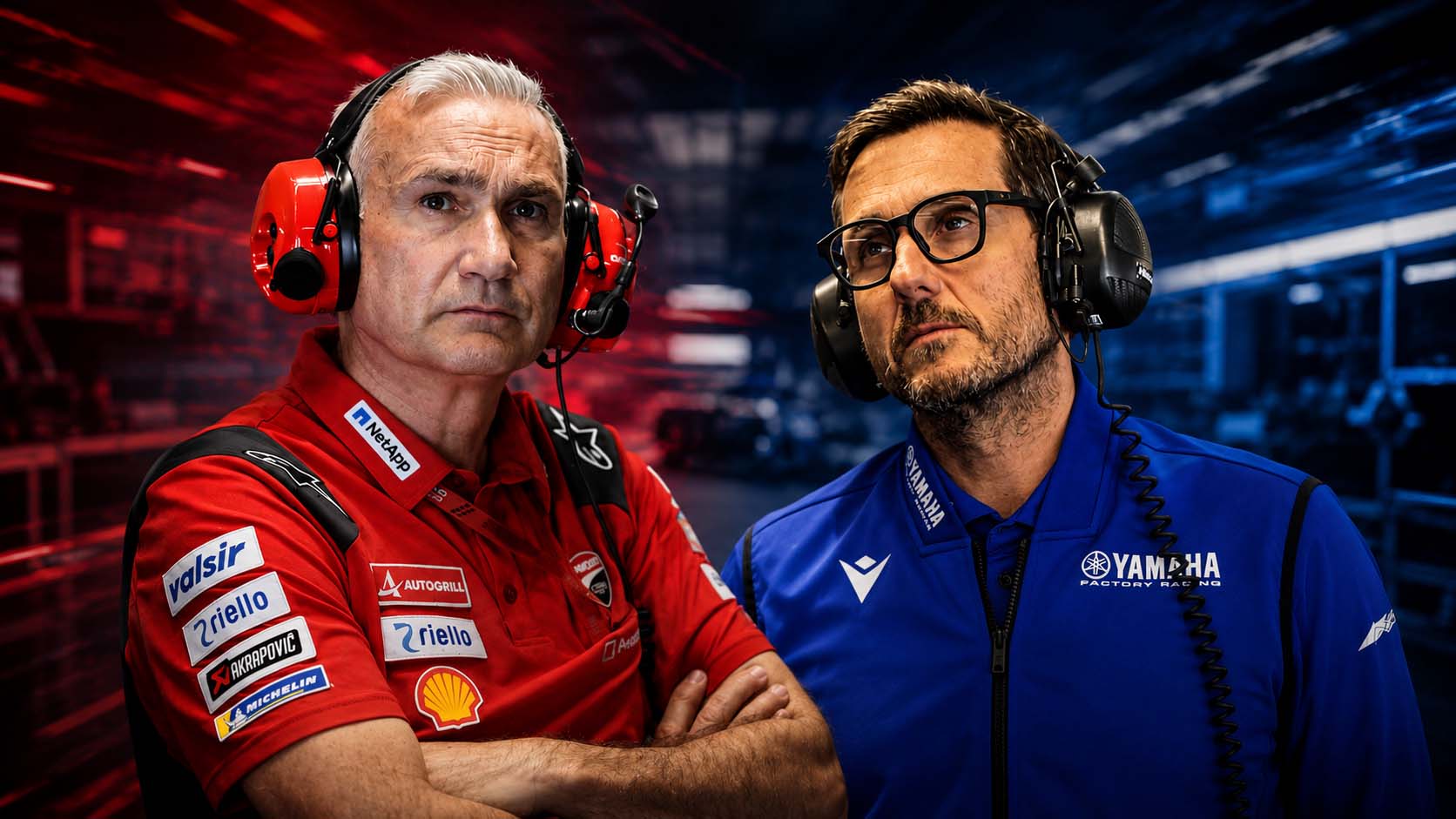
Now that an agreement has been reached between the manufacturers and MotoGP SEG, the transition toward the future of MotoGP is in full swing. In the background lies the 2026 championship—the last of an era characterized by extreme aerodynamics and downforce devices—while discussions continue on the details of the new agreement, many of which have not yet been made official. Among these, perhaps the most striking issue in the eyes of fans and industry insiders is the possibility of having a single bike per team in the pits during certain phases of the weekend.
One thing, however, is already certain: the main format of the weekend will not change. The Sprint Race and Sunday Grand Prix will remain unaltered. Everything else, however, is still under consideration. Economic, safety, and entertainment considerations are all on the table, with the stated goal of further increasing MotoGP’s popularity without compromising its identity. With this in mind, the first street circuit in Adelaide will be just one of the new developments planned for the near future.
Paolo Pavesio, Managing Director of Yamaha Racing, shed light on these issues.
“No changes to the format are planned,” said Pavesio, “but we’re evaluating over the rest of the weekend whether there might be measures—one of which could even be the use of one bike— that reduce crashes, contribute to safety, and simplify things. As Carlos Ezpeleta said, there is a process involving a number of entities within the MotoGP organization that meet in the GP Commission to approve such measures. Once we have the full picture, we’ll be able to comment in detail, but the flag-to-flag format will definitely remain,” he reassured.
This process therefore involves striking a balance between sporting, entertainment and economic considerations. “In such a long and extensive negotiation—one that involves five manufacturers who don’t necessarily all share the same point of view, as well as the organizer— many ideas and diverse perspectives are brought to the table, it doesn’t end with a middle ground, but as Ezpeleta said when we started talking, if 90% of everyone is happy, that means the process was done correctly. If someone is very happy and someone else isn’t satisfied, we all try to contribute in a positive way.”
Among the reasons, in addition to the economic ones, is the protection of the sport and its riders. "The reasons behind that discussion are to preserve the sport by protecting its most important asset—the riders. So, potentially, with just one bike, we might ride a little less; we’d need to be a bit more careful not to crash during practice, shifting the focus and extreme performance to the race weekend. These are some of the considerations that have been made and are currently being evaluated. This isn’t an exact science; personally , I think the investment should be concentrated on what makes the show, and the preparation days should help us deliver the show for the viewers, but the balance must be focused on the race and qualifying, which are also part of the race. Of course, if you ask an engineer or a rider, they’ll have different points of view, but we shouldn’t be too afraid of changes—they won’t be disruptive. If you think about it, this is the only top-level two-wheeled sport based on two vehicles, and the race itself won’t change.”
The Yamaha executive also pointed out that the 2027 regulations are already moving toward technical simplification. “I’m not saying the bikes will be drastically simplified,” Pavesio continued, “but one of the rationales behind the 850 evolution is precisely to simplify the bikes; the aerodynamic fairing will be smaller, as will the engine. But above all, there won’t be any lowering devices. There are always these two trends: on one hand, the pursuit of extreme performance by the manufacturers and engineers; on the other, the sport itself, which will remain the same. we’ve said many times that the bikes were becoming too fast for some tracks; there were no run-off areas, and people ended up watching from 300 meters away. So there are many aspects to consider. What I hope is that, as the new components of this agreement take effect—which will bring significant changes in terms of promotion, organization, and team structure, where major changes have been made regarding the teams’ eligibility to compete in the championship— We’re building a sporting product that’s evolving, but I understand that it’s intriguing to talk about this “single-bike rule”—which doesn’t exist because no one has ever said we’re switching to a single bike. It’s a hot topic, but I get it.”
Tardozzi: “Two bikes will remain in Sprint and GP races”

“The coming years will tell us if we’ve done well,” the Ducati manager continued, “but right now it’s all still on paper. The general opinion is that we need to boost the spectacle—which, from a sporting standpoint, is already there— though of course there can be boring races, just like in any other sport; there are games where I turn off the TV because I can’t stand watching 3,000 passes to the goalkeeper—I’m a born striker! The general consensus is to look for ways to create an even better spectacle, but with one eye on costs—because , honestly, they’ve risen significantly in recent years due to new marketing demands from the organizer, even though it’s clear that the sporting aspect remains the priority and must be managed. An agreement has been reached, but it will take weeks or months to work out the details and find common ground on everything. The possibility of using two bikes per race is on the table; in my opinion, they’ll be used for the sprints and the main race, but not for practice sessions.”
Doubts About Qualifying
However, important questions remain from a sporting perspective. Today, pre-qualifying determines direct access to Q2 and thus influences the entire weekend. A crash without the option to use a second bike could have even more serious consequences than they do now. “As with all changes,there are risks as well as advantages,” Tardozzi continued. “It’s true, a crash in qualifying could mean starting last—or twelfth out of twelve—but that would just be part of the new game. The flag-to-flag rule will certainly remain, as will the use of two bikes in the sprint and the race. I do remember, however, a fantastic performance by Marquez in Moto2, when he started last in Valencia and then finished first. It might be difficult to do that in MotoGP, but every situation has its pros and cons. I think we’ll need to understand how this new regulation will affect certain situations and how it will benefit others.”