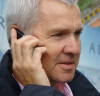

For more than 30 years, Stefan Pierer was considered a celebrated, courageous, successful entrepreneur and visionary. In 1991, he bought parts of the insolvent KTM Motor Fahrzeugbau from KTM Sportmotorcycles GmbH, which became KTM AG in 2005. In the early 1990s, the Austrian was considered a "recruiting expert" who, with exemplary instinct, bought up financially troubled companies, restructured them, and resold them at a profit. So, after acquiring KTM, he took over the Swedish brand, Husaberg, as well as Dutch suspension manufacturer WP, Husqvarna in 2012, GASGAS in 2019, and even a 50.1% stake of MV Agusta Motor in2023.
However, by the beginning of 2024, the financial decline of what had become Europe's largest motorcycle manufacturer was already becoming apparent. In 2023, the company achieved its 13th consecutive record year, selling no fewer than 381,555 motorcycles, but its operating profit had already shrunk from €235 million Euros to €160 million Euros, compared to the previous year. And the end of Pierer Mobility AG's seemingly endless growth was also in sight.
The motorcycle manufacturer from Mattighofen had previously grown at an alarming rate. In the 2012/2023 fiscal year, its revenue increased to €88.4 million Euros compared to the previous year; an increase of 16%. Its growth then rapidly continued. In 2016, the Pierer Group reported sales of €1,223.6 million Euros, representing an increase of 13%. In 2017, KTM entered both the Moto2 World Championship and the MotoGP with its own motorcycles, which nearly doubled sales to €2.661 billion Euros by 2023. Meanwhile, CEO Stefan Pierer had extended their ambitious "Ready to Race" strategy to the Husqvarna and GASGAS brands across all conceivable product lines.
Pierer, who's 69 years old, self-critically described his earlier entrepreneurial activities as those of a "locust", referring to the acquisition of financially troubled companies, their restructuring, and their subsequent profitable resale. At the height of its success, KTM not only competed for victories and World Championship titles in all three GP classes, but it also won the Dakar Rally 18 times in a row and regularly dominated the Motocross World Championship and the US Supercross Championship.
As a successful automotive strategist, Stefan Pierer was even promoted to the Mercedes supervisory board, was appointed president of the MSMA, as well as chairman of the European Automobile Manufacturers Association (ACEM), president of the Federation of Austrian Industries of Upper Austria, and so on.
At the opening of the impressive "KTM Motohall" in Mattighofen in May 2019, CEO Stefan Pierer reviewed 66 years of the company's history. The Styrian native talked about how he took over KTM after its bankruptcy in the winter of 1991/1992 at the urging of KTM’s former motocross world champion, Heinz Kinigadner. The number of employees that had remained at the factory when it restarted on January 8th, 1992 was 160. The planned annual production of 6,700 units was guaranteed by importers in the USA, Italy (Farioli), France (Royal Moto), and Germany (Toni Stöcklmeier).
In the late 1980s, KTM CEO Erich Trunkenpolz had failed in his attempt to diversify the family business in the years leading up to 1990, opening two additional business areas (bicycle manufacturing and radiator production). However, these new businesses got off to a slow start, and consequently, the core business ran out of money. Trough his GIT Trust Holding, former Austrian People's Party (ÖVP) politician, Josef Tausor, orchestrated a hostile takeover and dealt the final blow to the factory with a rather uninspired management and puzzling personnel decisions.
Before Taus' takeover, KTM had a turnover of €73 million Euros and approximately €36 million Euros in debt. At the time of the bankruptcy, the situation had reversed, according to eyewitnesses. As early as August 1991, Italian KTM importer Farioli foresaw the inevitable bankruptcy. In December 1991, Taus and KTM filed for the largest corporate bankruptcy of the year in Austria, with debts amounting to €73 million Euros and hundreds of jobs lost.
Looking back, Pierer said, "At the time, I was working in what was called 'restructuring'. I wanted to restructure KTM and then sell it on. But two people persuaded me to spend my entrepreneurial life in the Innviertel region... Heinz Kinigadner and designer Gerald Kiska."
What happened in the 31 years from 1992 to 2023 was considered a prime example of entrepreneurial skill, the courage to take business risks, a passion for motorsports, employee motivation, a keen sense for business, and many other positive qualities the CEO Stefan Pierer possesses. After acquiring KTM, he also bought WP Suspension and Husqvarna, also leading these companies to success, until the bitter end, when the insolvency proceedings began at the end of 2024.
In 2018, KTM and Husqvarna sold 261,500 motorcycles, while KTM employed more than 4,300 people worldwide, with a revenue that exceeded €1.5 billion Euros, along with a continued unabated growth.
Stefan Pierer took over KTM as a recruiting expert at 34 years of age. This turnaround skill served Pierer well in 2008 and 2009, when KTM was severely impacted by the global financial crisis and had 25,000 unsold motorcycles sitting in storage. Pierer rigorously cut costs, withdrew from the 125cc and 250cc road racing world championships, and saved KTM, not least thanks to a €33.6 million Euros guarantee from the state of Upper Austria.
Originally, Pierer had also intended to sell KTM again after the successful restructuring, as he once confided in private. He first took KTM public in 1996. Harley-Davidson was flush with current assets at the time and emerged as a serious potential buyer. But the Americans preferred to invest in a new factory in Manaus, Brazil and abandoned the takeover of their Austrian competitor.
At the opening of the KTM MotoHall in 2019, Stefan Pierer looked back with pride on his life's work, as his voice faltered. In 2014, Mattighofen's mayor, Friedrich Schwarzenhofer, approached Pierer with the idea of a KTM museum, since the derelict municipal depot - located right next to the main square and opposite the town hall - was considered an eyesore in the heart of this town of about 8,000 citizens. The exact address of the impressive Motohall became "KTM Platz 1".
"I'll take the sign with me as an incentive for my sports department," Stefan Pierer had said, cheerfully. The Motohall's spiral-shaped building is a real eye-catcher and stands in stark contrast to the traditional surroundings in Mattighofen's town center.
The "KTM Motohall" still showcases many decades of KTM, Husky, and GASGAS products on four floors. the investment for this project amounted to €35 million Euros were, with construction costs at €30 million Euros, while €5 million Euros was spent on its content, namely, all the exhibits, which had to be sourced from around the world or replicated. The architecturally magnificent Motohall was intended to attract up to 60,000 visitors per year, but this ambitious goal was never reached. Only about 30,000 people annully visit this modern center, which shouldn't be called a museum. "Anyone who mentions that term for the Motohall has to pay five Euros every time," Stefan Pierer once declared.
As the undisputed CEO, Pierer vigorously drove the company's expansion for years. In the eight years, from 2011 to 2019 alone, €250 million Euros were invested in infrastructures, factories, development, and the motorsports division. A quarter of a billion Euros! During this period, 2,000 new employees had also been hired.
"For more than seventy years, KTM has been driven by the racing spirit," Stefan Pierer stated before the company's insolvency. "Motorsports combine voluntary and forced innovation. In a category like the MotoGP, you see where you stand every two weeks. You can imagine what happens with us on Monday... It creates an indescribable dynamic. Motorsports is our central driving force and our emotional glue. It's the very core of KTM."
Until the end of 2023, the Pierer Group had sped from one record result to the next, in terms of revenue and growth, for thirteen consecutive years. As early as 2012, Pierer announced his ambition to become the world's third-largest sports motorcycle manufacturer, behind Honda and Yamaha. How did he intend to achieve this? "Quite simply... brands, innovation, globalization, and employees. These are the four ingredients, in conjunction with our strategic partner, Bajaj, in India," Pierer stated, describing his battle plan.
As Long-time KTM CEO, Stefan Pierer had to then step down from all functions in January 2025 and has not held shares in the Austrian motorcycle manufacturer since November 2025, although the company is still listed on the Vienna and Zurich stock exchanges as Pierer Mobility AG.
In November 2025, the Bajaj Group acquired 100% of Pierer Bajaj AG. Until then, Pierer Industrie AG held 50.1% and Bajaj B.V. 49.9%. However, thanks to a cash injection of approximately €800 million Euros, Bajaj has now taken control of Pierer Bajaj AG, which holds a 75% stake in Pierer Mobility AG. The remaining 25% of PMAG is publicly traded (free float).
Stefan Pierer, the 69-year-old industrialist, also owns other extensive holdings as well as the Pierer Immoreal GmbH real estate company. The structure of the Pierer Industrie AG holding company includes a considerable industrial portfolio: it owns 100% of the shares in Abatec in Upper Austria, a leading company for electronic assemblies in Austria, with a revenue of €250 million Euros and 220 employees. PMAG also owns 80% of the Pankl Group, which produces and develops high-tech components for motorsports, aviation, and mobility, with a total of 4,500 employees and annual revenue of €1 billion Euros. The Pankl Group also includes Schwäbische Hüttenwerke Automotive GmbH (SHW). This company supplies pump systems and engine technology for the automotive industry. Furthermore, through Robau-Beteiligungs GmbH, PIAG holds a 34.5% stake in Rosenbauer, a leading global provider of fire and disaster protection solutions, which develops and produces vehicles, extinguishing technologies, equipment, and digital solutions for fire departments. Pierer also has a 49.9% stake in the major German automotive supplier, Leoni AG, having sold a 50.1% stake to the Chinese Luxshare ICT Group on July 10th, 2025.